from the South Bend Tribune
4/17/09
By MARGARET FOSMOE
Tribune Staff Writer
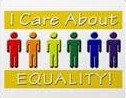
SOUTH BEND — Some University of Notre Dame students on Thursday snapped up free T-shirts, eager to join a campus effort to eliminate hatred toward gays, lesbians and transgender people.
The black T-shirts, with white lettering, read: "I will not be silent. I will not be indifferent. I will not just tolerate."
The T-shirt giveaway was part of the annual "Make a StaND Against Hate" week on campus, designed to end hostility toward others based on sexual identity.
Many Notre Dame students generally are accepting of others, regardless of sexual orientation, but there still are jokes, hurtful remarks and hostile comments heard on campus, according to students involved in the shirt handout.
"I had several friends who had to transfer (from Notre Dame) because they experienced daily harassment in their dorms (regarding their sexual orientation)," said Notre Dame junior Eddie Velazquez, co-chair of the campus Core Council for Gay, Lesbian, Bisexual & Questioning Students. Such hostility "is definitely present on this campus," he said.
The week's events are "really important. I feel like a lot of people here just brush (such issues) under the rug," said freshman Jason G'Sell, who stopped by to pick up a T-shirt.
Some students will be wearing the shirts today to mark National Day of Silence, dedicated to creating safer schools and colleges for everyone, regardless of sexual orientation or gender identity.
The week's activities included banner signings, a film screening and the shirt giveaway. The events end today with a silent campus procession and a prayer service.
Staff writer Margaret Fosmoe:
mfosmoe@sbtinfo.com
Friday, April 17, 2009

Tuesday, March 31, 2009
Rise of hate groups should be no surprise
Thursday, March 26, 2009 3:21 AM
By Leonard Pitts Jr.
There are now 926 hate groups in this country.
Take a second and consider that number. It represents an increase of more than 50 percent since 2000. And by hate groups, I don't mean guys in their bathrobes who go online and pretend their followers are legion. No, I mean actual Klan cells, Neo-Nazi sects, gay-bashing "churches," cliques of black separatists, white nationalists, nativists, racist skinheads and other merchants of venom who meet, plot and recruit in all 48 contiguous states. (Alaska and Hawaii have no known hate groups.) Nine hundred twenty-six of them. The number is a record.
We learn this from the Southern Poverty Law Center www.splcenter.org) in Montgomery, Ala., which has, since its founding in 1971, become a leading authority on the business of hate. According to the latest issue of Intelligence Report, the center's quarterly magazine, that business is booming.
And maybe you wonder how this can be. How can hate enjoy such phenomenal growth in a nation where a Jew serves as senator from Connecticut, a Muslim serves as representative from Minnesota, a Hispanic is governor of New Mexico and a black man is president? The answer is that we are a nation where a Jew serves as senator from Connecticut, a Muslim serves as representative from Minnesota, a Hispanic is governor of New Mexico and a black man is president. Because if those things strike you as signs of progress, well, they are signs of apocalypse to those who believe only white, male Christians are fit to lead.
But that's not the only reason for the increase. The center also cites the debate over illegal immigration that has dominated much of this decade. Though President George W. Bush offered thoughtful, moderate leadership on the issue, he was drowned out by demagogic extremists competing to see which could most effectively scapegoat undocumented workers. They, too, bear responsibility here.
Finally, there is the economy. When things get tough, people become more receptive to the idea that their miseries are all the fault of some alien other. So the stock market, too, is implicated. Hate rises when the Dow falls.
I imagine the center's findings land like cold water in the faces of those who took Barack Obama's ascension to the presidency as proof that the nation was finally cured of the sickness of hate. The truth, I'm afraid, is more nuanced than that.
Maybe it helps to think in terms of alcoholism, a disease that can, with treatment, be contained, controlled, put into remission -- but never cured. Even when you've got years of sobriety under your belt, the germ of it lurks in your bloodstream. Which is why alcoholics do not call themselves cured. Rather, they say they are recovering.
Hate is something like that, a fact some of us have never quite understood. Such folks are convinced there is a goal line out there somewhere which, once crossed, will allow the nation to declare itself cured. And once cured, we'll never have to grapple with hatred again.
But it doesn't work that way.
In a nation so deeply riven by culture, race and religion, there is always a temptation to hate somebody, to blame some group of others for the job you lost, the crime committed against you, the fear and uncertainty you feel. There is a simplicity and a seductiveness to it that are all too easily mistaken for righteousness.
So there is no cure for a nation's hate. There is only an ongoing process of getting better, not unlike the alcoholic who must daily earn his sobriety anew. This explosion of hate is a reminder of what happens when we forget that, when we are undeservedly sanguine about how enlightened we've become.
It is said that eternal vigilance is the price of freedom. Well, that's the going rate for tolerance, too.
Leonard Pitts Jr. is a columnist for The Miami Herald.
lpitts@miamiherald.com
By Leonard Pitts Jr.
There are now 926 hate groups in this country.
Take a second and consider that number. It represents an increase of more than 50 percent since 2000. And by hate groups, I don't mean guys in their bathrobes who go online and pretend their followers are legion. No, I mean actual Klan cells, Neo-Nazi sects, gay-bashing "churches," cliques of black separatists, white nationalists, nativists, racist skinheads and other merchants of venom who meet, plot and recruit in all 48 contiguous states. (Alaska and Hawaii have no known hate groups.) Nine hundred twenty-six of them. The number is a record.
We learn this from the Southern Poverty Law Center www.splcenter.org) in Montgomery, Ala., which has, since its founding in 1971, become a leading authority on the business of hate. According to the latest issue of Intelligence Report, the center's quarterly magazine, that business is booming.
And maybe you wonder how this can be. How can hate enjoy such phenomenal growth in a nation where a Jew serves as senator from Connecticut, a Muslim serves as representative from Minnesota, a Hispanic is governor of New Mexico and a black man is president? The answer is that we are a nation where a Jew serves as senator from Connecticut, a Muslim serves as representative from Minnesota, a Hispanic is governor of New Mexico and a black man is president. Because if those things strike you as signs of progress, well, they are signs of apocalypse to those who believe only white, male Christians are fit to lead.
But that's not the only reason for the increase. The center also cites the debate over illegal immigration that has dominated much of this decade. Though President George W. Bush offered thoughtful, moderate leadership on the issue, he was drowned out by demagogic extremists competing to see which could most effectively scapegoat undocumented workers. They, too, bear responsibility here.
Finally, there is the economy. When things get tough, people become more receptive to the idea that their miseries are all the fault of some alien other. So the stock market, too, is implicated. Hate rises when the Dow falls.
I imagine the center's findings land like cold water in the faces of those who took Barack Obama's ascension to the presidency as proof that the nation was finally cured of the sickness of hate. The truth, I'm afraid, is more nuanced than that.
Maybe it helps to think in terms of alcoholism, a disease that can, with treatment, be contained, controlled, put into remission -- but never cured. Even when you've got years of sobriety under your belt, the germ of it lurks in your bloodstream. Which is why alcoholics do not call themselves cured. Rather, they say they are recovering.
Hate is something like that, a fact some of us have never quite understood. Such folks are convinced there is a goal line out there somewhere which, once crossed, will allow the nation to declare itself cured. And once cured, we'll never have to grapple with hatred again.
But it doesn't work that way.
In a nation so deeply riven by culture, race and religion, there is always a temptation to hate somebody, to blame some group of others for the job you lost, the crime committed against you, the fear and uncertainty you feel. There is a simplicity and a seductiveness to it that are all too easily mistaken for righteousness.
So there is no cure for a nation's hate. There is only an ongoing process of getting better, not unlike the alcoholic who must daily earn his sobriety anew. This explosion of hate is a reminder of what happens when we forget that, when we are undeservedly sanguine about how enlightened we've become.
It is said that eternal vigilance is the price of freedom. Well, that's the going rate for tolerance, too.
Leonard Pitts Jr. is a columnist for The Miami Herald.
lpitts@miamiherald.com
Monday, February 16, 2009
Celebrating with the NAACP
from the South Bend Tribune
2/15/09
A day to celebrate a century of work by the NAACP
COMMENTARY
LEONARD PITTS
It began before it began.
This was in 1905 when the great black scholar W.E.B. DuBois called a meeting of prominent black men. They met on the Canadian side of Niagara Falls because hotels in their own country would not accommodate them and formed what became known as the Niagara Movement.
The Movement, which held a subsequent meeting at Harper’s Ferry, W.Va., issued a statement that said in part, “We claim for ourselves every single right that belongs to a freeborn American, political, civil and social; and until we get these rights we will never cease to protest and assail the ears of America.” But the movement, hampered by various difficulties, soon sputtered and became inactive.
Then the riot came.
For six days in August of 1908, a mob of white people surged through the streets of Springfield, Ill., lynching and maiming black people at will and at whim. The irony of this happening in the hometown of Abraham Lincoln, earnestly if somewhat simplistically revered as the Great Emancipator, was lost on no one, the rioters least of all. “Lincoln freed you, we’ll show you your place,” they cried as they flogged black people through the streets.
The appalling spectacle energized white liberals like Mary White Ovington and Oswald Garrison Villard. On Lincoln’s 100th birthday, Feb. 12, 1909, they joined with DuBois and other remnants of the Niagara Movement to issue a call for a conference on race. That call, a century ago today, was the birth certificate of the National Association for the Advancement of Colored People.
The milestone simultaneously demands and defies commemoration.
It is, after all, hard to hug an institution. And if it’s true that history is biography, it’s not hard to understand why the NAACP has often seemed overshadowed by larger-than-life personalities like Malcolm X, Marcus Garvey, Martin Luther King, Jesse Jackson. Even its most celebrated members — DuBois, Ida B. Wells-Barnett, Thurgood Marshall, Medgar Evers, Rosa Parks — are better known for what they did than for the organization to which they belonged.
Who regards the NAACP with the reverence those men and women inspire? DuBois notwithstanding, there is in the NAACP story no central charismatic figure. Instead, there is The Work. There is fighting voter suppression and protesting lynch law and writing legal briefs. There is issuing press releases and filing complaints and lobbying lawmakers. There is awarding scholarships and publishing reports and sponsoring workshops and holding accountable. There is advancement made in increments.
Until one day you look up and see that because of those increments, the world has changed as if in a bolt of lightning. The 1954 Brown v. Board of Education decision is the most obvious illustration, but really, the proof is the whole country since 1909. It is Sidney Poitier and Condoleezza Rice and Guion Bluford and Barack Obama. And me. Maybe even you.
For all that, one often senses in African America a certain ambivalence toward the NAACP. Too middle class, says one school of criticism. Not relevant, says another. Still others are offput by scandals of leadership over the last 15 years or so. And for some, perhaps the organization’s greatest sin is simply this: it is not exciting.
Organizations seldom are.
But they do The Work, don’t they? The Work that is bigger than one person and longer than one life. Because the NAACP has done The Work, we can pause upon a milestone in a world transformed, a world in which Obama is president and Oprah is queen. If the difference looks like a lightning bolt, we know better.
And we celebrate the increments by which we advance.
Leonard Pitts Jr. is a columnist for the Miami Herald, 1 Herald Plaza, Miami, FL 33132. Readers may write to him via e-mail at lpittsmiamiherald.com.
2/15/09
A day to celebrate a century of work by the NAACP
COMMENTARY
LEONARD PITTS
It began before it began.
This was in 1905 when the great black scholar W.E.B. DuBois called a meeting of prominent black men. They met on the Canadian side of Niagara Falls because hotels in their own country would not accommodate them and formed what became known as the Niagara Movement.
The Movement, which held a subsequent meeting at Harper’s Ferry, W.Va., issued a statement that said in part, “We claim for ourselves every single right that belongs to a freeborn American, political, civil and social; and until we get these rights we will never cease to protest and assail the ears of America.” But the movement, hampered by various difficulties, soon sputtered and became inactive.
Then the riot came.
For six days in August of 1908, a mob of white people surged through the streets of Springfield, Ill., lynching and maiming black people at will and at whim. The irony of this happening in the hometown of Abraham Lincoln, earnestly if somewhat simplistically revered as the Great Emancipator, was lost on no one, the rioters least of all. “Lincoln freed you, we’ll show you your place,” they cried as they flogged black people through the streets.
The appalling spectacle energized white liberals like Mary White Ovington and Oswald Garrison Villard. On Lincoln’s 100th birthday, Feb. 12, 1909, they joined with DuBois and other remnants of the Niagara Movement to issue a call for a conference on race. That call, a century ago today, was the birth certificate of the National Association for the Advancement of Colored People.
The milestone simultaneously demands and defies commemoration.
It is, after all, hard to hug an institution. And if it’s true that history is biography, it’s not hard to understand why the NAACP has often seemed overshadowed by larger-than-life personalities like Malcolm X, Marcus Garvey, Martin Luther King, Jesse Jackson. Even its most celebrated members — DuBois, Ida B. Wells-Barnett, Thurgood Marshall, Medgar Evers, Rosa Parks — are better known for what they did than for the organization to which they belonged.
Who regards the NAACP with the reverence those men and women inspire? DuBois notwithstanding, there is in the NAACP story no central charismatic figure. Instead, there is The Work. There is fighting voter suppression and protesting lynch law and writing legal briefs. There is issuing press releases and filing complaints and lobbying lawmakers. There is awarding scholarships and publishing reports and sponsoring workshops and holding accountable. There is advancement made in increments.
Until one day you look up and see that because of those increments, the world has changed as if in a bolt of lightning. The 1954 Brown v. Board of Education decision is the most obvious illustration, but really, the proof is the whole country since 1909. It is Sidney Poitier and Condoleezza Rice and Guion Bluford and Barack Obama. And me. Maybe even you.
For all that, one often senses in African America a certain ambivalence toward the NAACP. Too middle class, says one school of criticism. Not relevant, says another. Still others are offput by scandals of leadership over the last 15 years or so. And for some, perhaps the organization’s greatest sin is simply this: it is not exciting.
Organizations seldom are.
But they do The Work, don’t they? The Work that is bigger than one person and longer than one life. Because the NAACP has done The Work, we can pause upon a milestone in a world transformed, a world in which Obama is president and Oprah is queen. If the difference looks like a lightning bolt, we know better.
And we celebrate the increments by which we advance.
Leonard Pitts Jr. is a columnist for the Miami Herald, 1 Herald Plaza, Miami, FL 33132. Readers may write to him via e-mail at lpittsmiamiherald.com.
Wednesday, January 21, 2009
America's sin: Silence in the face of injustice
America's sin: Silence in the face of injustice
VOICE OF THE PEOPLE
1/21/09
In his "Letter from a Birmingham Jail," the Rev. Martin Luther King Jr. proclaimed, "We will have to repent in this generation not merely for the vitriolic words and actions of the bad people, but for the appalling silence of the good people ..."
While we can take comfort in the fact that the civil rights movement ended this country's most blatant forms of racism, the persistence of injustice in our society should inspire outrage and action.
Are we standing in appalling silence as our immigrant neighbors live in constant fear of workplace raids and racial profiling — all because they were forced to leave their home countries to find work to support their families?
Are we speaking out to demand and end to discrimination against people based on their sexual orientation? Or are we watching silently as others are denied equal rights?
Are we demanding that this exceptionally rich country provide for the basic needs of all? Or are we content to substitute charity for justice as long as our own comforts are secure?
If King were alive today, he would no doubt demand that we end these appalling silences that perpetuate human suffering and indignity.
Jackie Smith
South Bend
VOICE OF THE PEOPLE
1/21/09
In his "Letter from a Birmingham Jail," the Rev. Martin Luther King Jr. proclaimed, "We will have to repent in this generation not merely for the vitriolic words and actions of the bad people, but for the appalling silence of the good people ..."
While we can take comfort in the fact that the civil rights movement ended this country's most blatant forms of racism, the persistence of injustice in our society should inspire outrage and action.
Are we standing in appalling silence as our immigrant neighbors live in constant fear of workplace raids and racial profiling — all because they were forced to leave their home countries to find work to support their families?
Are we speaking out to demand and end to discrimination against people based on their sexual orientation? Or are we watching silently as others are denied equal rights?
Are we demanding that this exceptionally rich country provide for the basic needs of all? Or are we content to substitute charity for justice as long as our own comforts are secure?
If King were alive today, he would no doubt demand that we end these appalling silences that perpetuate human suffering and indignity.
Jackie Smith
South Bend
Tuesday, January 20, 2009
My apologies
I must apologize for the delay in posting several articles. Sometimes, it gets a bit overwhelming having to deal with the "gay agenda". You know, living a "homosexual lifestyle" can be quite tiring with having to constantly deal immoral activities such as caring for kids, school activities, homework, meals, housework, holidays and family. Things like keeping up with a blog sometimes just have to wait. I'm just grateful that Denise picked up more milk yesterday. Now, if I can just remember to pick the dog u some treats, we'll be back on top of things.
Ordinary
From the South Bend Tribune
Voice of the People
12/31/08
I have always known I was different. I could not put a name on it, but people around me sensed my vulnerability and they used it against me. When I was very young I was sexually abused by a teenage neighbor. I stayed pretty much a loner for a good part of my life since.
It would be years before I could put a name on my feelings. I have taken classes at Indiana University South Bend in psychology, sociology and anthropology. These diversity classes led me into gay organizations where I finally found a home. I can relate to these people and I have found peace of mind among them. So it makes me feel sad when
Christians use the Bible to discredit and misrepresent the gay experience in this community and elsewhere.
ay people are ordinary people just trying to live their lives. That's all. End of story. We are kind, giving, responsible people who wish nothing more than to stop being discriminated against.
Bernie Dolezal Jr.
South Bend
Voice of the People
12/31/08
I have always known I was different. I could not put a name on it, but people around me sensed my vulnerability and they used it against me. When I was very young I was sexually abused by a teenage neighbor. I stayed pretty much a loner for a good part of my life since.
It would be years before I could put a name on my feelings. I have taken classes at Indiana University South Bend in psychology, sociology and anthropology. These diversity classes led me into gay organizations where I finally found a home. I can relate to these people and I have found peace of mind among them. So it makes me feel sad when
Christians use the Bible to discredit and misrepresent the gay experience in this community and elsewhere.
ay people are ordinary people just trying to live their lives. That's all. End of story. We are kind, giving, responsible people who wish nothing more than to stop being discriminated against.
Bernie Dolezal Jr.
South Bend
Happiness is the Declaration of Human Rights
From the South Bend Tribune
Michiana Point of View
12/12/08
I was sitting in the Local 5, United Auto Workers, hall for the 60th anniversary of the United Nations' Universal Declaration of Human Rights on Dec. 6 and I was feeling proud. I had a smile in my heart. I was smiling because my dear mother was so proud of being a union member all of the years that she worked at Simplicity Pattern Company. I was proud because my daughter is a current member of Local 5. The unions make it possible for working-class people, people of color and women, to live well -- good decent independent lives. Honest money.
I was proud of the Indiana University South Bend students who provided us with slapstick between speakers. I smiled at the adorable little girl, now a teenager, who I remember sleeping in the brown rocking chair that I bought from her mother during the West Washington Street yard sale 10 years ago. I smiled at all of the people in the room who I have known for years who, like me, are gray, wrinkled, pot-bellied and committed.
I smiled to think about the article in The Tribune that said Eleanor Roosevelt was instrumental in getting the Universal Human Rights Declaration passed and how Hillary Clinton stood up for women's rights in Beijing 13 years ago.
When it was my turn to speak, I was in good company as I stood up once again for individuals' long overdue human rights. A person's right to file a complaint with the South Bend Human Rights Commission if that person believes he or she may have been discriminated against because of sexual orientation or gender identity in the areas of education, housing, public accommodations or employment is a human right. I smiled because the South Bend Common Council came within one vote in 2006 of amending the ordinance that would allow this very basic human right: justice.
The late, beloved and former council member Roland Kelly and I held hands under the table as the ordinance was being debated. I always smile when I think of my sweetheart.
It seems so pitiful, so embarrassing and so sad that people today in this great country would have to beg for a basic human right, justice. Indianapolis passed the same ordinance in December 2005. South Bend can also.
The boogeyman accusations are, "where will this stop, we are going down a slippery slope, and these are special rights."
In the USA we don't stop. There is nothing slippery about this slope and the only thing special about these rights is that we openly deny them to some people while we give them to others.
I continue to run into people who are shocked that these rights are denied to some of our citizens. Those shocked are old and young, people of all races, and Christians and non-Christians.
Our Declaration of Independence talks about inalienable rights ... "Life, liberty and the pursuit of happiness." We don't stop until we fulfill the promise of the president that President-elect Barack Obama most admires, Abraham Lincoln, who stated in the Gettysburg Address, "Dedicated to the proposition that all men are created equal."
I smiled. I smiled inside; a smile of pride, hope and the confidence that we will do the right thing ... we always do. Happy birthday, Universal Declaration of Human Rights. Happy birthday to ya!
Charlotte D. Pfeifer lives in South Bend.
Michiana Point of View
12/12/08
I was sitting in the Local 5, United Auto Workers, hall for the 60th anniversary of the United Nations' Universal Declaration of Human Rights on Dec. 6 and I was feeling proud. I had a smile in my heart. I was smiling because my dear mother was so proud of being a union member all of the years that she worked at Simplicity Pattern Company. I was proud because my daughter is a current member of Local 5. The unions make it possible for working-class people, people of color and women, to live well -- good decent independent lives. Honest money.
I was proud of the Indiana University South Bend students who provided us with slapstick between speakers. I smiled at the adorable little girl, now a teenager, who I remember sleeping in the brown rocking chair that I bought from her mother during the West Washington Street yard sale 10 years ago. I smiled at all of the people in the room who I have known for years who, like me, are gray, wrinkled, pot-bellied and committed.
I smiled to think about the article in The Tribune that said Eleanor Roosevelt was instrumental in getting the Universal Human Rights Declaration passed and how Hillary Clinton stood up for women's rights in Beijing 13 years ago.
When it was my turn to speak, I was in good company as I stood up once again for individuals' long overdue human rights. A person's right to file a complaint with the South Bend Human Rights Commission if that person believes he or she may have been discriminated against because of sexual orientation or gender identity in the areas of education, housing, public accommodations or employment is a human right. I smiled because the South Bend Common Council came within one vote in 2006 of amending the ordinance that would allow this very basic human right: justice.
The late, beloved and former council member Roland Kelly and I held hands under the table as the ordinance was being debated. I always smile when I think of my sweetheart.
It seems so pitiful, so embarrassing and so sad that people today in this great country would have to beg for a basic human right, justice. Indianapolis passed the same ordinance in December 2005. South Bend can also.
The boogeyman accusations are, "where will this stop, we are going down a slippery slope, and these are special rights."
In the USA we don't stop. There is nothing slippery about this slope and the only thing special about these rights is that we openly deny them to some people while we give them to others.
I continue to run into people who are shocked that these rights are denied to some of our citizens. Those shocked are old and young, people of all races, and Christians and non-Christians.
Our Declaration of Independence talks about inalienable rights ... "Life, liberty and the pursuit of happiness." We don't stop until we fulfill the promise of the president that President-elect Barack Obama most admires, Abraham Lincoln, who stated in the Gettysburg Address, "Dedicated to the proposition that all men are created equal."
I smiled. I smiled inside; a smile of pride, hope and the confidence that we will do the right thing ... we always do. Happy birthday, Universal Declaration of Human Rights. Happy birthday to ya!
Charlotte D. Pfeifer lives in South Bend.
"Special Rights"
More wacky comments brought to you by CCV member, Tom Uebbing. Notice that he claims that regardless of what the facts are regarding homosexuality, we should still make a moral judgment on it. Of course, this moral judgment must be based on HIS understanding of HIS religion. No other opinions need apply.
From the South Bend Tribune
Voice of the People
12/12/08
Rev. Edward Ruetz's characterization of the opponents of special rights for homosexuals as unChrist-like is facile. He alleges that Jesus did not condemn homosexuality. Jesus affirmed the sin of Sodom will be punished. (Matthew 10:15; 11:24) Jesus' personally authorized representatives ("He who rejects you, rejects me" -- Luke 10:16), the Apostles, repeated his warning. Jude identified the sin of Sodom as "unnatural vice." (Jude 7)
Paul identified homosexual sex as sin (Romans 1:27) which if unrepented bars entrance to heaven. (1 Corinthians 6:9)
Even if homosexuality were inborn and genetic, which it is not, the practice should not be legitimized in the law any more than a hot temper. You still must make a moral judgment about it.
Simply uttering the magic word "discrimination" does not make a case for good law. If what is protected is an intrinsically disordered and morally wrong behavior -- homosexual sex -- enforcement of the law will inevitably pose a conflict for citizens of conscience. They would be punished for opposing the negative effects of homosexual behavior. We would punish what is good for the sake of accommodating what is bad. That is bad law.
Tom Uebbing
South Bend
From the South Bend Tribune
Voice of the People
12/12/08
Rev. Edward Ruetz's characterization of the opponents of special rights for homosexuals as unChrist-like is facile. He alleges that Jesus did not condemn homosexuality. Jesus affirmed the sin of Sodom will be punished. (Matthew 10:15; 11:24) Jesus' personally authorized representatives ("He who rejects you, rejects me" -- Luke 10:16), the Apostles, repeated his warning. Jude identified the sin of Sodom as "unnatural vice." (Jude 7)
Paul identified homosexual sex as sin (Romans 1:27) which if unrepented bars entrance to heaven. (1 Corinthians 6:9)
Even if homosexuality were inborn and genetic, which it is not, the practice should not be legitimized in the law any more than a hot temper. You still must make a moral judgment about it.
Simply uttering the magic word "discrimination" does not make a case for good law. If what is protected is an intrinsically disordered and morally wrong behavior -- homosexual sex -- enforcement of the law will inevitably pose a conflict for citizens of conscience. They would be punished for opposing the negative effects of homosexual behavior. We would punish what is good for the sake of accommodating what is bad. That is bad law.
Tom Uebbing
South Bend
Bathroom 'issue' just a silly distraction
From the South Bend Tribune
Voice of the People
12/10/08
Bathrooms? Please. This is the argument used in the '70s when many of us were working to get the Equal Rights Amendment passed. I remember hearing that what the proponents of the ERA really wanted was joint bathrooms. It was a ludicrous, weird argument.
And here it is again, being used by Joe Sergio, in his letter of Nov. 13. It would be laughable, except that it completely ignores the real issues: Justice, equality, and freedom -- in the workplace, in education, in housing and medical care -- for all people, not just for some, and instead focuses on toilets.
Why is that? Why would anyone want to cheapen a conversation about people and justice and equality in such a way? Conversations about difficult, controversial subjects are far better served, surely we can all agree, by focusing on the real issues.
Nancy Mascotte did not stand before the SouthBend Common Council to make a case for the creation of joint bathrooms serving both males and females. These already exist -- in our homes and in family bathrooms in many public places. She was speaking out for what does not exist: equality for all Americans. Let's not trivialize the issue.
Martha Carroll
South Bend
Voice of the People
12/10/08
Bathrooms? Please. This is the argument used in the '70s when many of us were working to get the Equal Rights Amendment passed. I remember hearing that what the proponents of the ERA really wanted was joint bathrooms. It was a ludicrous, weird argument.
And here it is again, being used by Joe Sergio, in his letter of Nov. 13. It would be laughable, except that it completely ignores the real issues: Justice, equality, and freedom -- in the workplace, in education, in housing and medical care -- for all people, not just for some, and instead focuses on toilets.
Why is that? Why would anyone want to cheapen a conversation about people and justice and equality in such a way? Conversations about difficult, controversial subjects are far better served, surely we can all agree, by focusing on the real issues.
Nancy Mascotte did not stand before the SouthBend Common Council to make a case for the creation of joint bathrooms serving both males and females. These already exist -- in our homes and in family bathrooms in many public places. She was speaking out for what does not exist: equality for all Americans. Let's not trivialize the issue.
Martha Carroll
South Bend
Wednesday, January 7, 2009
Judge and Jury
I've never been on trial before, although I worked as a paralegal for many years and am familiar with courtrooms. It is quite a different perspective, however, to actually feel like your fate lies in someone else's hands. That is the feeling I get when I think about the South Bend Common Council deciding whether or not to amend the city's Human Rights Ordinance to include sexual orientation and gender identity. I feel like they are judging me - like they have some strange power over my life.
In reality, these feelings are quite overblown. Although it seems like I'm begging for their blessing, all I really want is a place to go to file a grievance should I believe I've been discriminated against. The Council members don't need to condone with my orientation, or even really to understand it. They just need to admit that GLBT persons do face discrimination and should have somewhere to go to report allegations. This system works in cities all over America; there is no reason why it should not work here in South Bend.
I've given some thought as to why I feel like the Council is scrutinizing my friends and me every time this issue comes up. Maybe it's because of the way society tries to put GLBT persons in a box and marginalize us? Or, perhaps it is because it feels like those who condemn do so much more loudly than those who accept?
For whatever reason, I think there needs to be perspective on this issue. After all, this is not Solomon deciding whether or how to split the baby; it is elected officials recognizing a hole in the system of justice and equal rights that needs to be filled.
If the Council decides to allow GLBT persons access to the Human Rights Commission, life will be more secure. I'll gain assurance in the knowledge that my job, my house, my education, and my life in South Bend are valued and protected. If the amendment is rejected, I'll know that discrimination is definitely alive and well, and that it still permeates not only the fabric of society, but the power structure in our government, too.
Unfortunately, the latter confirmation would be no surprise, but it would be a big disappointment. After all, I am a constituent, too.
In reality, these feelings are quite overblown. Although it seems like I'm begging for their blessing, all I really want is a place to go to file a grievance should I believe I've been discriminated against. The Council members don't need to condone with my orientation, or even really to understand it. They just need to admit that GLBT persons do face discrimination and should have somewhere to go to report allegations. This system works in cities all over America; there is no reason why it should not work here in South Bend.
I've given some thought as to why I feel like the Council is scrutinizing my friends and me every time this issue comes up. Maybe it's because of the way society tries to put GLBT persons in a box and marginalize us? Or, perhaps it is because it feels like those who condemn do so much more loudly than those who accept?
For whatever reason, I think there needs to be perspective on this issue. After all, this is not Solomon deciding whether or how to split the baby; it is elected officials recognizing a hole in the system of justice and equal rights that needs to be filled.
If the Council decides to allow GLBT persons access to the Human Rights Commission, life will be more secure. I'll gain assurance in the knowledge that my job, my house, my education, and my life in South Bend are valued and protected. If the amendment is rejected, I'll know that discrimination is definitely alive and well, and that it still permeates not only the fabric of society, but the power structure in our government, too.
Unfortunately, the latter confirmation would be no surprise, but it would be a big disappointment. After all, I am a constituent, too.
Subscribe to:
Posts (Atom)